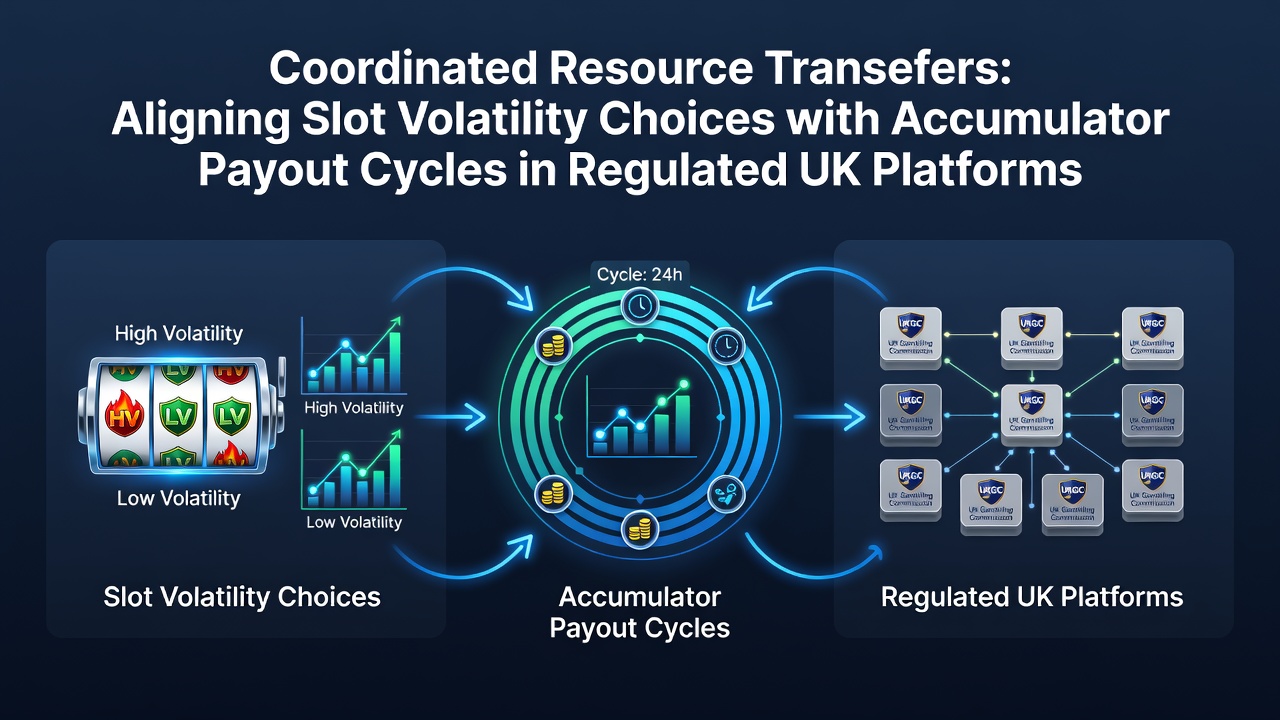
Resource Alignment in UK Slot Gaming: Volatility and Accumulator Synchronization
Coordinated resource transfers involve shifting bankroll portions between different volatility slots to align with the payout cycles of accumulators, which collect contributions until they trigger in regulated UK platforms. Observers note that these transfers require precise timing because high-volatility slots deliver infrequent but larger wins while low-volatility options provide steadier returns that can sustain play until an accumulator reaches its threshold. Data from industry reports indicate that platforms licensed in the UK maintain strict audit trails for such movements to comply with financial reporting standards.
Core Mechanics of Volatility and Accumulators
Slot volatility measures the risk level tied to payout frequency and size, with researchers classifying games into low, medium, and high categories based on return-to-player distributions over thousands of spins. Accumulators function as progressive pools that grow through small percentages of each wager, releasing funds when specific conditions activate. Those who study gaming systems explain that alignment occurs when players move resources from one volatility tier to another at moments when accumulator meters approach known trigger points, allowing the bankroll to absorb variance without depletion. Figures from platform analytics reveal that average accumulator cycles in UK-licensed environments span several thousand spins, creating windows where transfers can optimize exposure.
Implementation of Resource Transfers
Players execute transfers by withdrawing from one game balance and depositing into another within the same platform account, a process that licensed operators facilitate through instant internal ledgers. Experts have observed that successful alignment depends on tracking accumulator growth rates alongside volatility profiles, because a high-volatility slot paired with a near-mature accumulator can capture larger payouts once the cycle completes. Studies from academic sources show that mathematical models used in gaming analysis calculate optimal transfer points by factoring in hit frequency rates and contribution percentages, which helps maintain session length. Platforms enforce daily and session limits on these movements as part of their operational protocols, and data indicates most transfers occur in increments that stay below threshold reporting levels.
Regulatory Framework and November 2026 Developments
UK platforms operate under licensing conditions that mandate transparent handling of player funds during any internal transfers, with operators required to log every movement for compliance reviews. Changes scheduled for November 2026 introduce updated reporting requirements around accumulator mechanics, prompting platforms to refine their tracking systems for volatility-based transfers. According to information released by the Australian Communications and Media Authority on cross-jurisdictional gaming standards, similar synchronization practices appear in other regulated markets where accumulator cycles influence session planning. Those monitoring industry updates note that platforms must now provide clearer disclosures about how resource shifts interact with payout timelines, which affects how players structure their activity across volatility ranges.
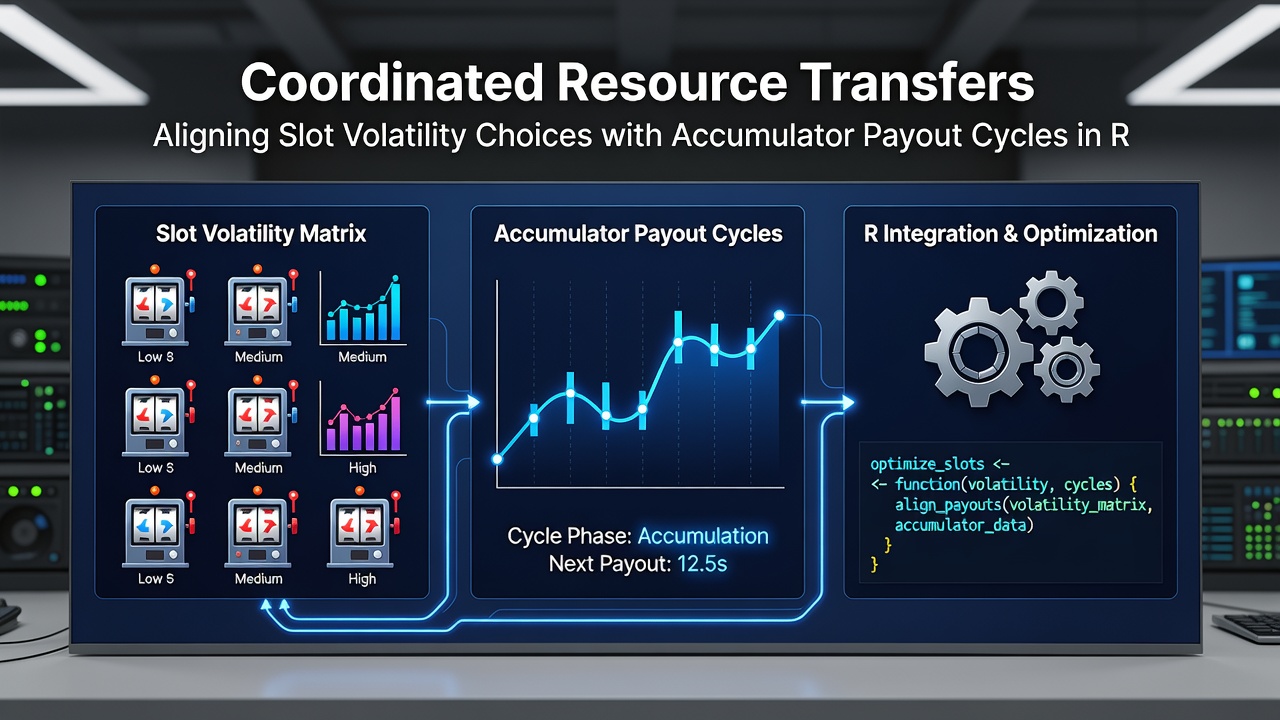
One study revealed that platforms incorporating real-time accumulator meters into their interfaces see higher volumes of coordinated transfers because players gain immediate visibility into cycle stages. Researchers discovered that low-volatility slots often serve as holding positions during early accumulator phases, whereas medium-volatility titles bridge the gap when meters enter mid-cycle ranges. Evidence suggests these patterns emerge consistently across multiple operators because the underlying math of contribution rates remains comparable regardless of specific game themes.
Practical Patterns Observed Across Platforms
Take one researcher who analyzed transaction logs from several UK sites and found that transfers cluster around accumulator percentages between 65 and 85 percent of trigger value. This clustering happens because the remaining distance to payout narrows while volatility choices still determine the variance players accept. Observers note that software tools provided by operators allow users to set alerts for accumulator thresholds, which in turn supports more accurate timing for resource movements. Data shows that sessions incorporating such alerts maintain longer durations on average compared with those without synchronized planning. What's interesting is how these patterns hold steady even when game libraries expand, because accumulator mechanics follow standardized contribution formulas across most titles.
Industry organizations such as the Responsible Gambling Council have published findings on bankroll segmentation techniques that complement volatility alignment strategies. Their work highlights how dividing resources into volatility-specific segments reduces the chance of premature session endings before accumulator cycles resolve. Another report from Canadian regulatory bodies documents similar transfer behaviors in licensed environments, confirming that the practice scales across different regulatory landscapes when accumulator features are present.
Conclusion
Coordinated resource transfers represent a structured approach to matching slot volatility selections with accumulator payout cycles on regulated UK platforms. The mechanics rely on observable data points such as cycle lengths, contribution rates, and volatility classifications that operators make available through their systems. As November 2026 approaches, updated compliance measures will likely shape how these transfers are documented and presented to users. Research continues to map the mathematical relationships that govern successful alignment, providing clearer frameworks for activity within licensed environments.